A well-designed paver walkway does more than connect different areas of your property—it improves accessibility, enhances curb appeal, and creates a natural flow throughout your outdoor space. One of the most important design decisions is determining the right width for the walkway.
Choosing the proper width ensures your walkway is comfortable to use, complements your home’s architecture, and fits seamlessly into your landscape design.
Why Walkway Width Matters
The width of a walkway affects both its appearance and functionality. A path that is too narrow can feel cramped, while one that is too wide may overwhelm the surrounding landscape.
The ideal width depends on how the walkway will be used and where it is located on your property.
Standard Walkway Widths
Most residential walkways fall within a few common size ranges that provide both comfort and practicality.
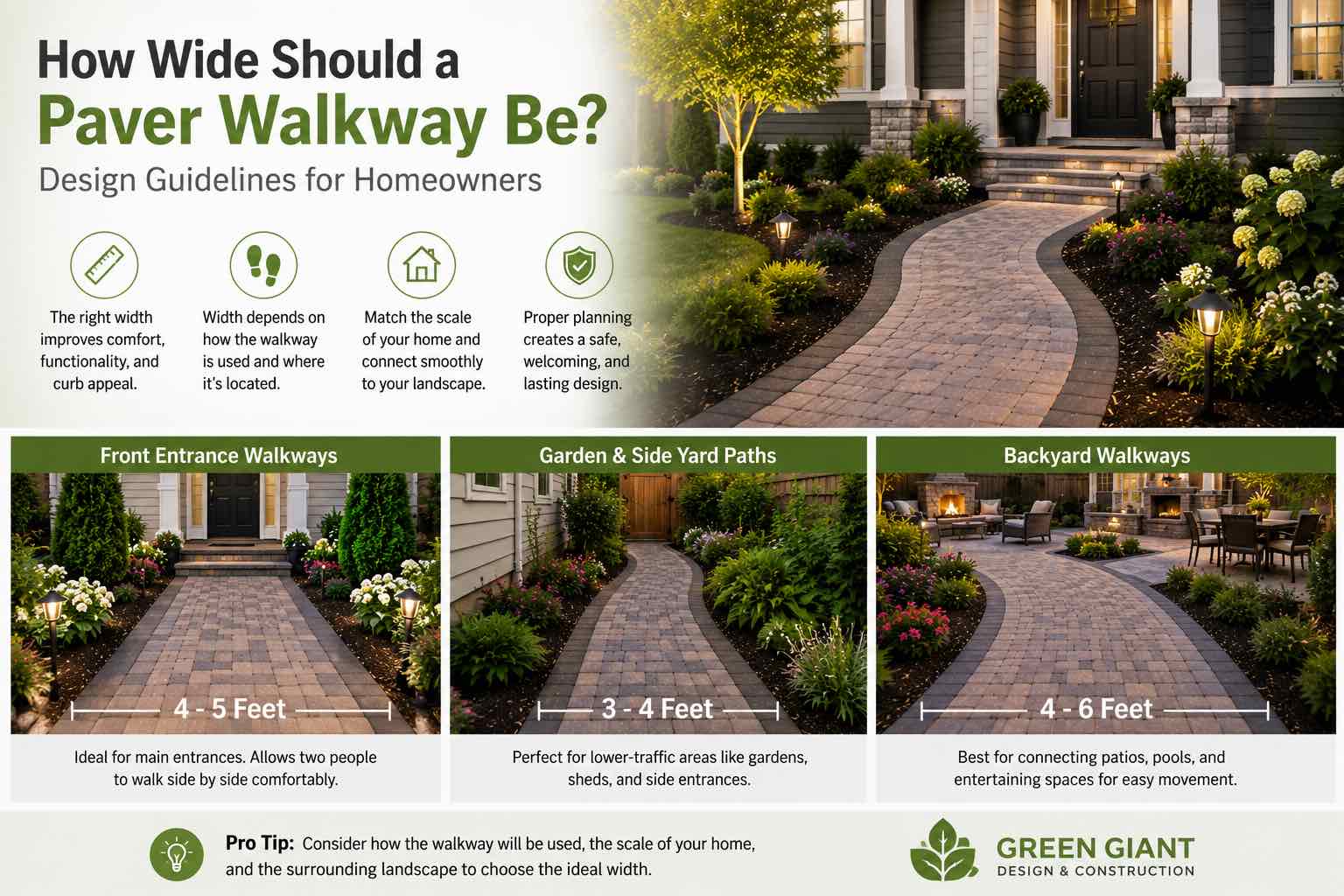
Front Entrance Walkways
Front walkways should create a welcoming path from the driveway or sidewalk to your front door.
A width of 4 to 5 feet is ideal for most homes, allowing two people to comfortably walk side by side while creating an inviting entrance.
Garden and Side Yard Paths
Walkways leading to gardens, sheds, or side entrances typically experience less foot traffic.
A width of 3 to 4 feet usually provides enough space while maintaining a balanced appearance.
Backyard Walkways
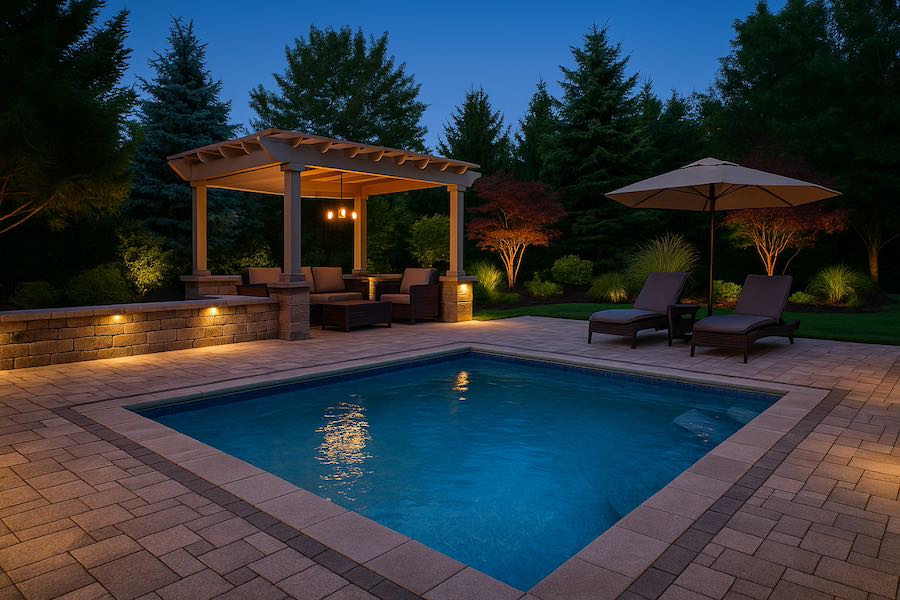
Walkways connecting patios, pools, outdoor kitchens, and other backyard features often benefit from additional width.
A width of 4 to 6 feet creates comfortable access while allowing guests to move easily between outdoor living areas.
Consider How the Walkway Will Be Used
The intended use of the walkway should guide its dimensions.
Questions to Ask
- Will two people frequently walk together?
- Will the path connect entertaining areas?
- Will equipment such as lawn carts or wheelbarrows use the walkway?
- Will the walkway serve as the primary entrance to the home?
Answering these questions helps determine the most practical width for your specific needs.
Match the Scale of Your Home
A walkway should feel proportional to the size of your home and landscape.
Design Tips
- Larger homes often benefit from wider walkways.
- Smaller homes typically look best with narrower, well-proportioned paths.
- Curved walkways can appear slightly wider because of their flowing design.
- Straight walkways often benefit from subtle border accents to add visual interest.
Maintaining proper proportions helps create a cohesive outdoor design.
Think Beyond the Walkway
Walkways rarely exist on their own. They often connect driveways, patios, entryways, and landscaping.
Create Smooth Transitions
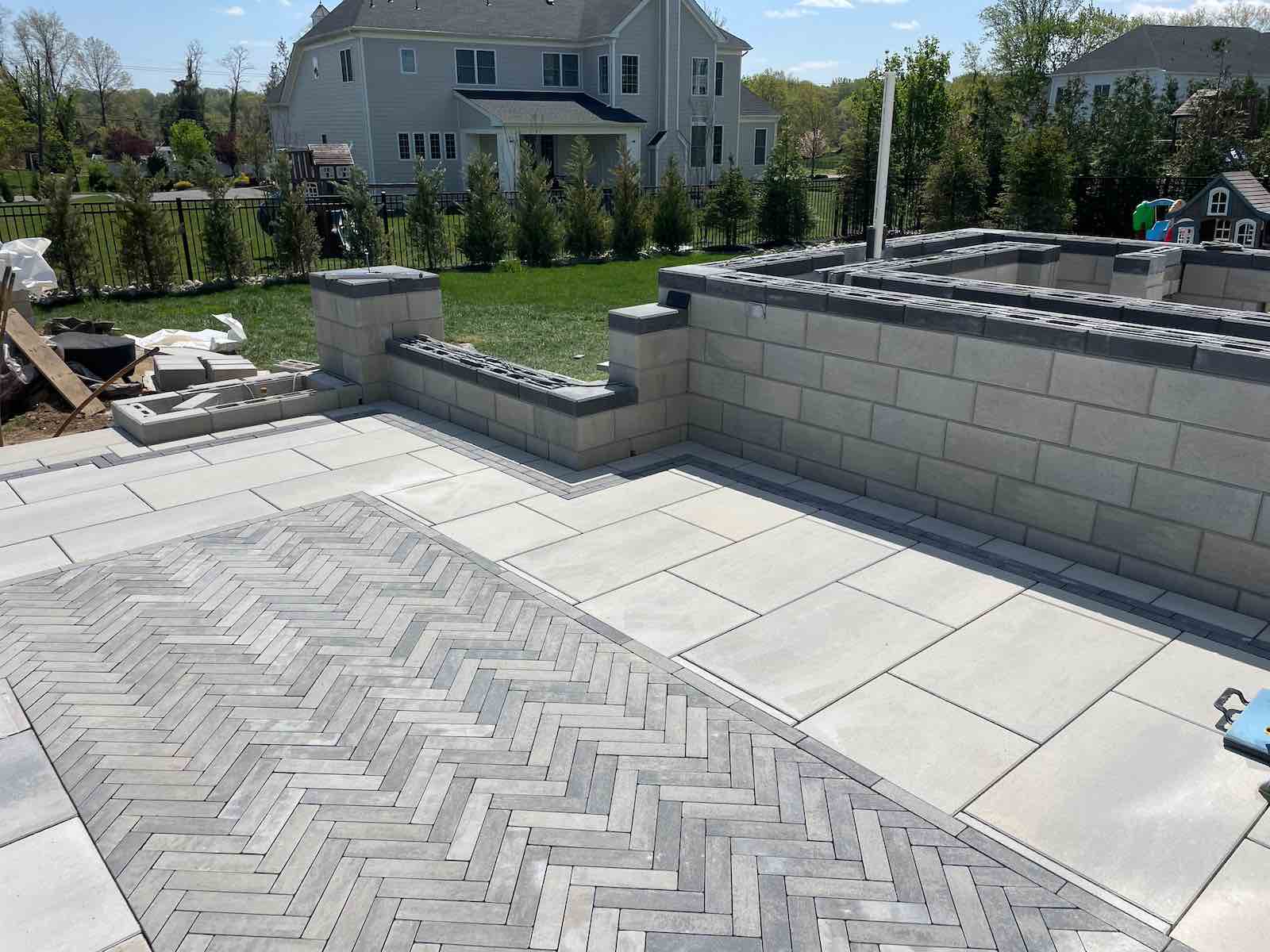
- Match paver styles with nearby hardscapes.
- Use consistent colors throughout the property.
- Incorporate border pavers for definition.
- Blend the walkway with surrounding planting beds.
These details help unify the entire outdoor space.
Don’t Forget Accessibility
Comfortable access should always be part of the design process.
A wider walkway makes it easier for family members and guests to navigate the space, improves everyday usability, and creates a more welcoming environment.
Professional planning also ensures proper grading, drainage, and a stable foundation for long-term performance.
Build a Walkway That Fits Your Home
The right walkway width balances beauty, comfort, and functionality. Whether you’re creating a welcoming front entrance, connecting a backyard patio, or designing a garden path, selecting the appropriate dimensions will improve both the appearance and usability of your outdoor space.
At Green Giant Design & Construction, we design and install custom paver walkways that complement your home’s architecture and outdoor living areas. From layout and material selection to expert installation, our team creates walkways that are built to last and designed to enhance your property.
Contact Green Giant Design & Construction today to schedule a consultation and start planning a custom paver walkway that fits your home and lifestyle.