When planning a paver patio in New Jersey, homeowners often focus on style, color, and layout. While design is important, one of the most critical factors in the long-term performance of a patio is proper drainage. Without it, even the most beautiful patio can develop issues such as shifting pavers, pooling water, and structural damage.
Because New Jersey experiences heavy rain, snow, and freeze–thaw cycles throughout the year, drainage must be carefully planned during installation.
Water Is the Biggest Threat to Patio Stability
Water that sits on or beneath a patio can gradually weaken the foundation that supports the pavers. When moisture becomes trapped in the base materials or surrounding soil, it can cause erosion, settlement, and uneven surfaces over time.
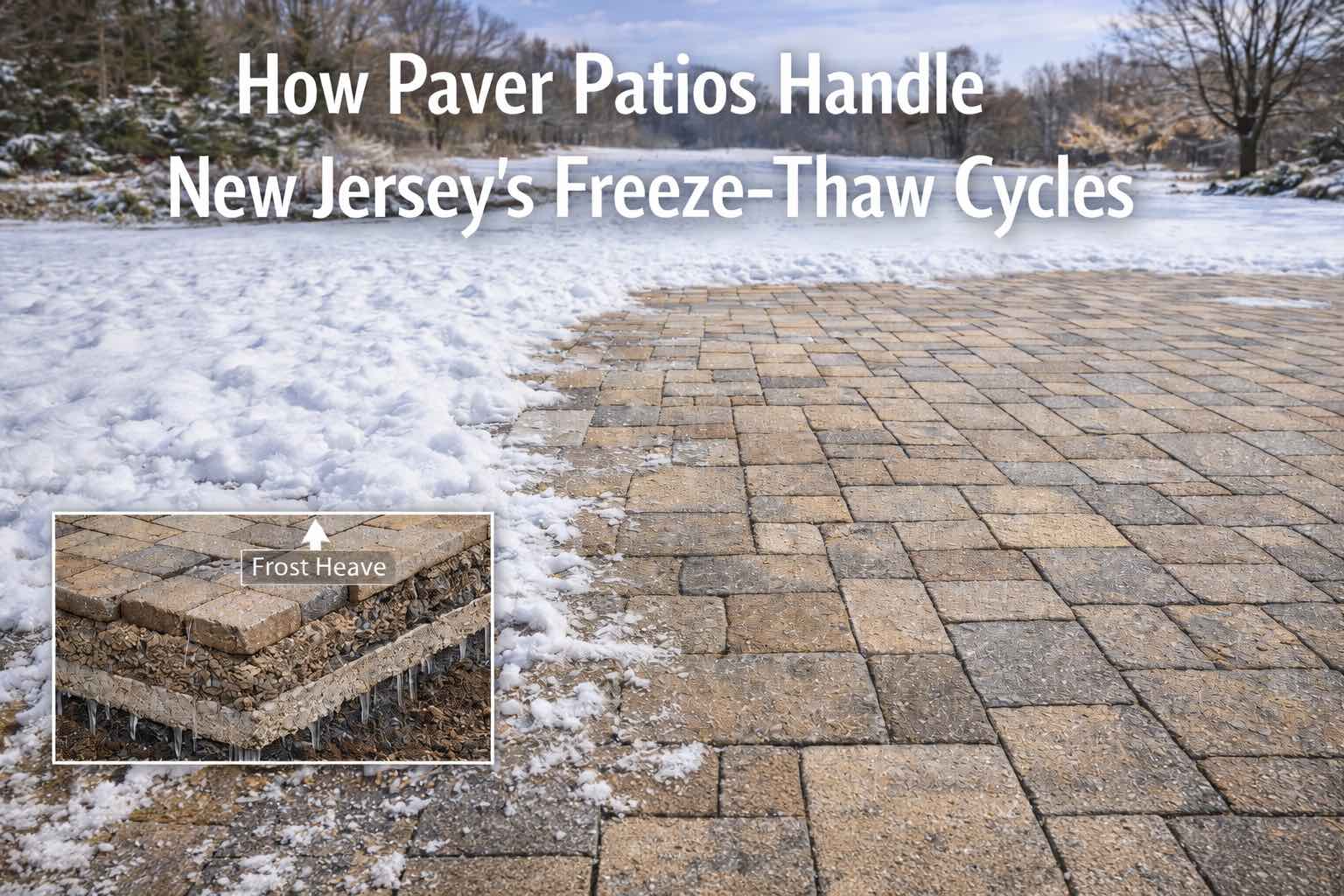
During the winter months, trapped water can freeze and expand, placing pressure on the patio and leading to frost heave. This can cause pavers to lift, shift, or create uneven areas that require repair.
Proper drainage prevents these issues by allowing water to move away from the patio efficiently.
How Professional Drainage Design Protects Your Patio
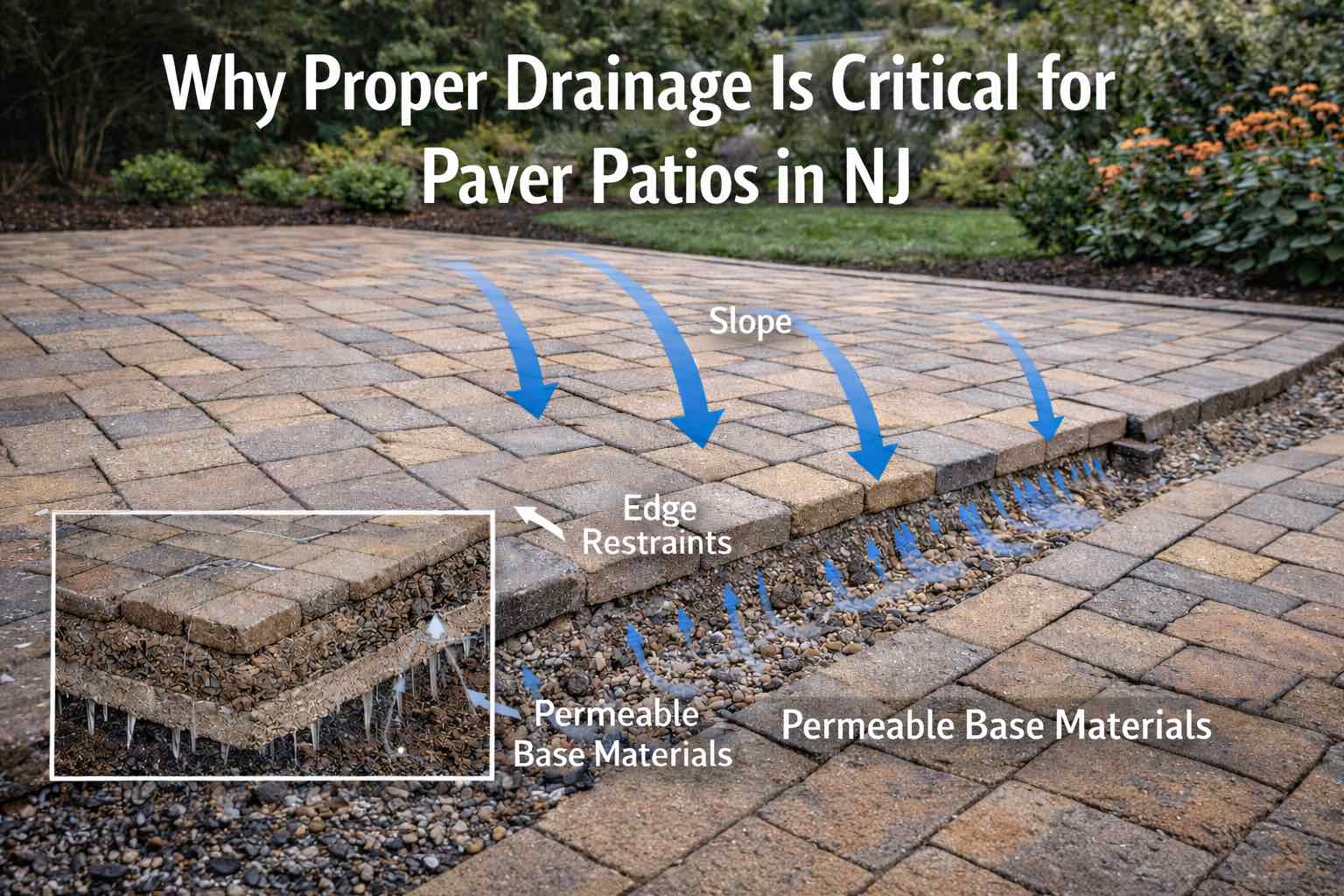
A properly installed paver patio is designed to guide water away from both the surface and the underlying base layers. Contractors accomplish this through careful grading and installation techniques.
Key drainage considerations include:
- Patio slope: The surface is slightly angled to direct water away from the home and surrounding structures
- Permeable base materials: Layers of crushed stone allow water to filter through rather than become trapped
- Edge restraints: These help keep the patio structure intact while maintaining consistent drainage flow
- Proper compaction: Ensures the base remains stable and does not shift when exposed to moisture
Together, these elements create a system that protects the patio from water-related damage.
Managing Heavy Rainfall in New Jersey
New Jersey storms can bring sudden and heavy rainfall, which makes surface drainage especially important. A properly graded patio allows rainwater to run off naturally instead of forming puddles.
In some cases, additional solutions may be used to manage water flow, including:
- Channel drains
- French drains
- Gravel drainage zones
- Downspout extensions
These systems help move water safely away from the patio and nearby structures.
Preventing Long-Term Structural Problems
Poor drainage doesn’t just affect the patio surface—it can also impact nearby landscaping, foundations, and walkways. Water that collects around a patio can lead to soil erosion and shifting ground conditions.
Addressing drainage during installation helps protect the entire outdoor living space, ensuring that the patio remains level, stable, and visually appealing for many years.
Built to Handle New Jersey’s Weather
New Jersey homeowners deal with a wide range of weather conditions throughout the year, from summer storms to winter snow and ice. Proper drainage ensures that a paver patio can handle these seasonal changes without developing costly problems.
A well-designed drainage system works quietly in the background, protecting the patio’s foundation and helping it perform reliably year after year.
Plan Your Paver Patio with Green Giant Design & Construction
If you’re planning a paver patio for your home, proper drainage should always be part of the design from the very beginning. The team at Green Giant Design & Construction specializes in building durable outdoor living spaces that are designed to handle New Jersey’s climate.
From site preparation and grading to expert installation and finishing details, every patio is built with long-term performance in mind.
Contact Green Giant Design & Construction today to schedule a consultation and start planning a paver patio that looks great and performs reliably for years to come.